
Banning Sex Predators from the Sex Industry
On 19 March 2026, the Victorian Parliament voted down a new law to ban registered sex offenders from working in either the sex industry or stripping industries. Libertarian politician David Limbrick tabled the amendment, which represented a minor change to the law which only affects registered sex offenders. Labor and the Greens opposed the amendment, with the Nationals and Liberals supporting it.
In 2022 Victoria decriminalised sex work, a move widely supported by sex workers. However, these landmark reforms created an odd legal loophole: the law permitted registered sex offenders to work in Victoria’s sex industry. I worked closely with David Limbrick to develop this amendment after consulting for 9 months with the sex industry and key stakeholders. I am disappointed Labor and the Greens opposed this amendment.
The Victorian Government has confirmed the review of Victoria’s sex industry decriminalisation laws will commence in late 2026 and that reforms of this nature will be considered as part of that review. The Victorian Government has not indicated whether or not it will move to ban registered sex offenders from the sex industry even after the review in 2026 – 2027.
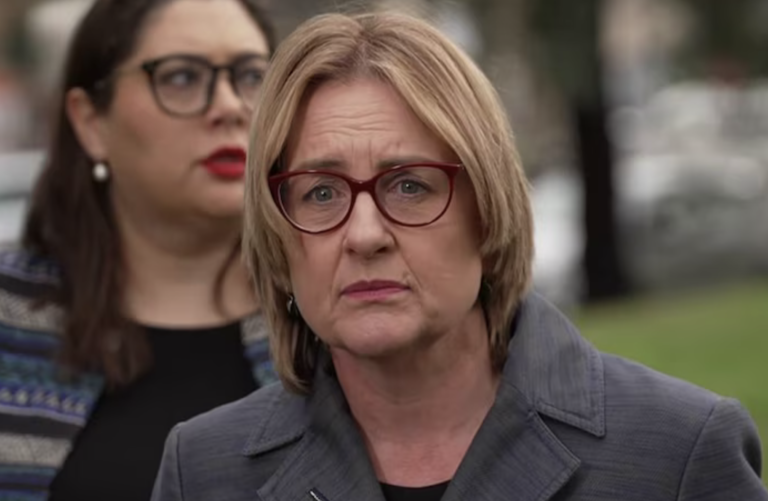
Why Did Some Politicians Oppose the Amendment?
"....genuine need to consider how to balance the rights of individuals to engage in legitimate forms of work with the need to protect people who are accessing these services.......I always talk in this chamber about how employment is an important protective factor, so therefore prohibiting a registrable offender from engaging in lawful employment is potentially going to have adverse community safety outcomes, which we do not want.”
Enver Erdogan, MP (Labor)
“....there are a diversity of views amongst sex work community on this issue.”
Katherine Copsey, MP (Greens)
“stakeholders were not consulted on this prior to circulation……Those that I have spoken to are concerned about the implications of such an amendment and how it would treat sex work differently to other adult personal services.”
Rachel Payne, MP (Legalise Cannabis)
“I am worried about the effects of rushing a change of this significance. I am also concerned, as stakeholders have raised, that introducing industry-specific employment prohibitions and giving more opportunities for police intervention in an industry that has only just been decriminalised and has historically been overpoliced may have unintended consequences.”
Georgie Purcell, MP (Animal Justice)
For more on these quotes, see references 33-36.
Media Covers Parliament Vote
On 1 April 2026 Docklands News published an article titled ‘Sex industry amendment defeated in Parliament, with opponents calling result a win for sex workers’. Read more on my Media Appearance page here.
Why Did I Support This Amendment?
I supported this amendment which, if passed into law, would apply a blanket ban on registered sex offenders working in the sex industry or stripping industries. The amendment is targeted and specific to the registered sex offenders only. Registered sex offenders still have the ability to work lawfully in a wide range of other industries. Registered sex offender status is not lifelong for most offenders, meaning this prohibition on working in the sex industry will be temporary for most registered sex offenders. This new law does not restrict the work lives of the vast majority of sex workers who are not registered sex offenders. As a law abiding male sex worker who is not a registered sex offender, I am comfortable with this new law. I was in parliament on 19 February 2026 and 19 March 2026 when this amendment was introduced and debated. More about me here. Read about my sex worker rights’ litigation court case here.
Yes, many. Around 20% of sex workers in Australia are men. [2] [3] [4] Men also commonly work in other roles in the sex industry and stripping industries. Most escort agency drivers are men. Men own and manage brothels, massage parlours and strip clubs. Brothel cleaners, strip club and brothel promoters are often men. [6] Private escorts sometimes pay someone to manage their work phone and manage their admin and bookings. These roles are also sometimes done by men.
In short, they are the worst of the worst. Convicted serial rapists and/or convicted paedophiles. [7] Examples of crimes which can cause someone to be added to the sex offenders register include: rape, incest, bestiality, child porn, molesting children. [8]
In 2025, of the 11,154 registered sex offenders in Victoria, 98% were men. [9] Registered sex offenders face a ‘registration’ period which can vary. A court can impose a registration period of 8 years, 15 years or life. [10] Registered sex offenders face some restrictions even once they leave prison, such as obtaining permission to leave the country, a prohibition on working with children and a requirement to report and update certain personal details to police. [11]
Someone can’t be added to the sex offenders register based merely on a rumour, allegation or pending charges at court. Only those found guilty, convicted and sentenced for serious sex crimes become registered sex offenders.
No. The list of registered sex offenders is not public, only being available to the police and other law enforcement officials. [12]
Yes. In 2025, the media exposed an Australian gay male sex worker in Melbourne. This man, a former primary school teacher and convicted fraudster, is also a registered sex offender, after spending time in prison for possessing and distributing child porn. [13-16] Upon release from prison, he repeatedly reoffended by failing to meet his reporting requirements as a registered sex offender. [17] After his release from prison, this offender operated lawfully in Victoria’s sex industry. This is because Victoria does not currently impose a blanket ban on registered sex offenders working in the sex industry. Read more about this case in the media:
Herald Sun: ‘Should’ve shot more cops’: Sex offender allegedly praises Dezi Freeman on social media (behind a paywall)
Docklands News: Docklands sex offender arrested after alleged breach of bail (1 October 2025)
This same offender is facing fresh criminal charges in 2026 and is due to face court in October 2026. [49]
Police have access to information which enables them to ascertain how many registered sex offenders work in the stripping and sex industries. [18] However, the total number of registered sex offenders working in Victoria’s sex industry is not made public.
It is hard to know for sure. Allowing such offenders to work in the sex industry may facilitate and enable these offenders to commit further crimes against sex work clients or even other sex workers.
There is evidence that the registered sex offender referred to above committed a crime against at least one other sex worker. The allegations of an image based abuse crime were reported to police in 2025.
These reforms, if passed, will reduce the access that sexual predators previously had to sex workers and strippers. These reforms seek to apply a blanket ban on registered sex offenders working in the sex industry or stripping industry, reducing their ability to offend against sex workers, strippers or others in the sex/stripping industries.
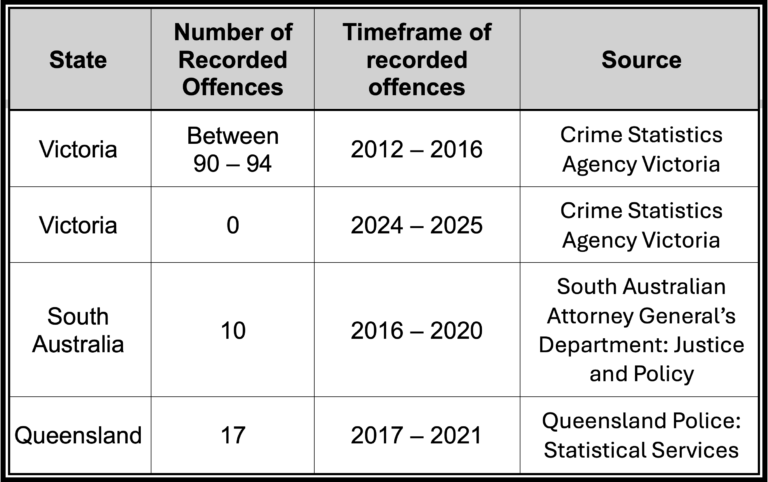
Convicted paedophiles clearly pose a risk to children, but existing state law does not permit children to work in the sex industry, so what’s the risk of a paedophile working in the sex industry? [19]
Unfortunately, there are cases where adults break the law and involve children in the sex industry in Victoria and elsewhere in Australia.
Do Police Currently Have the Power to Ban Registered Sex Offenders from the Sex Industry?
Theoretically yes, but in practice such bans have not been imposed. Under the existing Sex Offenders Registration Act, prohibition orders theoretically allow the Chief Commissioner of Police to ban registered sex offenders from working in certain industries. [24] However, last financial year, of the 11,154 registered sex offenders in Victoria, prohibition orders were only applied to 0.1% of registered sex offenders (only 13 prohibition orders were approved). [25]
Existing prohibition order powers have been completely useless at banning registered sex offenders from the sex industry for a number of reasons:
- They are not automatically imposed, instead relying on the police to actively spend time applying to a court for each individual registered sex offender; [26]
- Only the Chief Commissioner of Police can apply for a prohibition order, rather than other members of police; [27]
- A prohibition order involves a protracted and complex application process which must go to to court and only be approved by a Magistrate if certain strict criteria are met; [28]
- Prohibition orders can only last for up to five years; [29]
- Police have not applied to impose a prohibition order on a gay male based sex worker who is a known registered sex offender;
- Prohibition orders are not designed to impose bans on working in the sex industry;
- Last year only 13 prohibition orders were approved, and we have no way of knowing whether any of these orders applied bans on working in the sex work or stripping industries.
What Victoria needs now is an automatic and blanket ban on all registered sex offenders working in any capacity in the sex work or stripping industries.
Did Police Previously Have the Power to Ban Registered Sex Offenders from the Sex Industry?
Sort of. Between 1995 and 2023, Victoria had a licensing system of sex work laws where sex industry owners and managers were required to be licensed with Victoria’s Business Licensing Authority (BLA). [30] Authorities could refuse a sex industry license on the grounds that an applicant was not a ‘suitable’ person considering criminal convictions and considering the applicant’s character, honesty and integrity. [31] This means that the Business Licensing Authority had the discretion to refuse a brothel manager/owner license to someone with serious sex crime convictions.
In terms of individual sex workers, the previous licensing system required individual sex workers (who were not working for a brothel or escort agency) to register with the BLA and go a register accessible to Victoria Police, but not accessible to the public. [32] However, there was no restriction on registered sex offenders being approved to work as individual sex workers.
There have not previously been restrictions on registered sex offenders working in the stripping industry.
The proposed ban on registered sex offenders working in the sex/stripping industries was proposed by Libertarian MP, David Limbrick who has a voting history of supporting sex workers’ rights. [41-42]
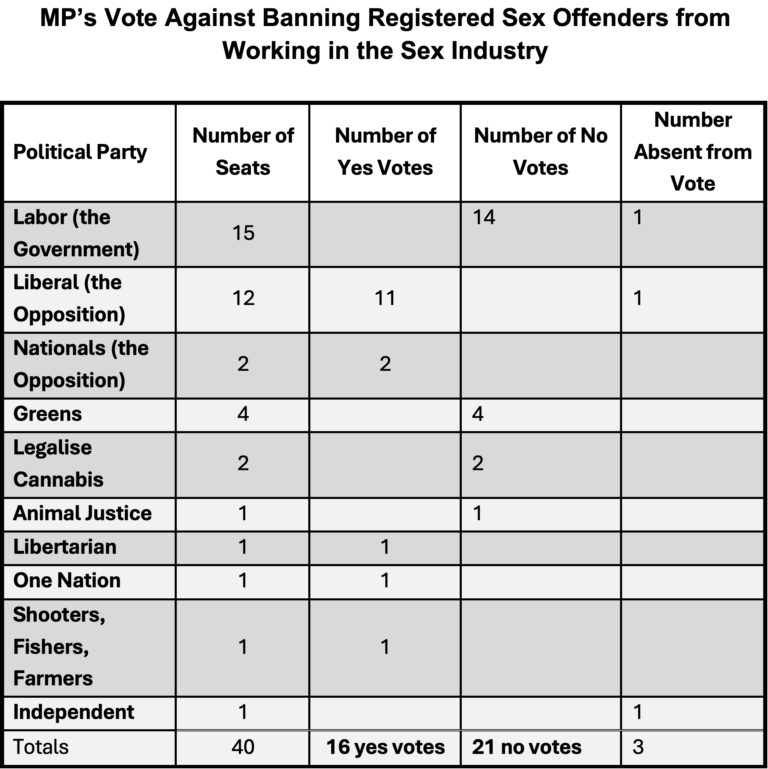
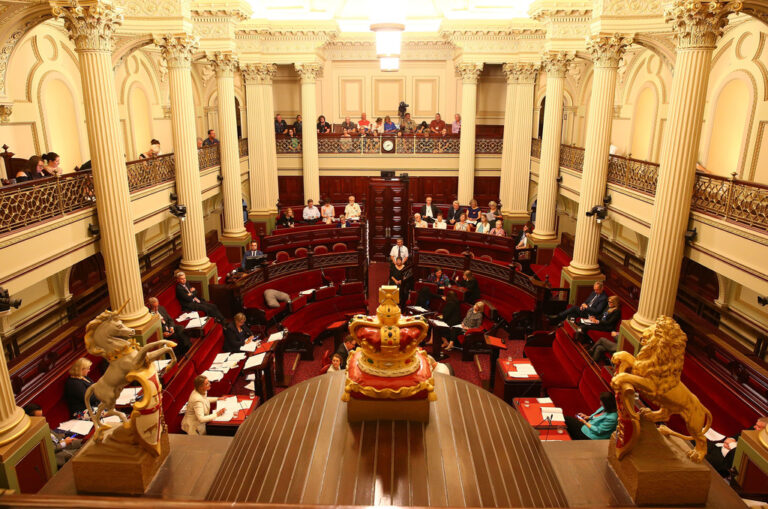
On 19 March 2026, Labor and the Greens opposed this amendment. The Liberals and Nationals backed it. With 16 votes for the amendment and 21 votes against, the amendment failed. [1]
Here is a breakdown of the votes for and against the amendment in Upper House. As the amendment was voted down in the Upper House, there was no vote on the amendment in the Lower House.
A ‘yes’ or ‘Ayes’ vote is a vote to ban registered sex offenders from working in the sex industry.
A ‘no’ or ‘Noes’ vote is a vote against a new law to ban registered sex offenders from working in the sex industry.
Vixen and Scarlet Alliance are two unrepresentative health promotion charities which operate in Victoria. [45-46] Government funded, Scarlet Alliance is supposed to support sex workers. [47] This amendment is designed to make sex work safer by reducing the risk of serious sex offenders committing crimes against those working in sex industry. Safety is in Scarlet Alliance’s constitution, being one of their principal activities:
‘Working to guarantee the right of all sex workers to optimum occupational health and safety, including general health knowledge and safe work practices’ [48]
Despite this, neither Vixen or Scarlet Alliance have publicly indicated whether or not they support reforms of this nature, which seek to ban registered sex offenders from working in the sex industry or stripping industry.
First and foremost I want to thank Libertarian state MP David Limbrick for proposing this legislative amendment. I also want to thank Docklands News editor Sean Car for being the first journalist to have the courage to cover the issue of a registered sex offender working in the sex industry.
Further reading:
Victoria Police Annual Reports
(Search for ‘Sex Offenders Registration Act 2004’ to go to the section with aggregate statistics on registered sex offenders)
Victoria Police Webpage about Registered Sex Offenders
Approved Form of Notice to be Given to a Registrable Offender
The Legislative Process Handbook was published in 2025 by the Office of the Chief Parliamentary Counsel (Victoria)
David Limbrick MP proposed an amendment to the Justice Legislation Further Amendment (Miscellaneous) Bill 2025 (Vic). The amendment is formally titled, ‘To amend the Sex Offenders Registration Act 2004 in relation to registrable offenders working in commercial sexual services or sexually explicit entertainment employment.’
https://www.legislation.vic.gov.au/sites/default/files/2026-02/Limbrick-DL73C.pdf
The Victorian Government has indicated it will consider the issue of banning registered sex offenders as part of the review of sex work decriminalisation laws. This review will commence in late 2026 or 2027. There is no guarantee the Victorian Government will agree to pass reforms of this nature, even after the review has concluded.
South Australia Moves to Ban Registered Child Sex Offenders from Dating Apps
In 2026 the South Australian Government is seeking to introduce similar reforms after the South Australian Attorney General indicated the state would seek to ban registered child sex offenders from dating apps. [50] Kyam Maher was quoted on SBS saying,
"If you have a conviction for sexual violence, for domestic violence, for child sex offences, then you will be banned from dating apps."
Kyam Maher, South Australia's Attorney General
I hope South Australia, unlike Victoria, will be able to introduce these type of reforms in the interest of protecting victims of crime and limiting access offenders have to potential victims.
- See pp73-74 of Hansard for 19/03/2026 for the Legislative Council
https://www.parliament.vic.gov.au/49517f/globalassets/hansard-daily-pdfs/hansard-974425065-34884/hansard-974425065-34884.pdf
2. Selvey, L., Hallett, J., Lobo, R., McCausland, K., Bates, J., & Donovan, B. (2017). Western Australian Law and Sex Worker Health (LASH) Study. A Summary Report to the Western Australian Department of Health. Perth: School of Public Health, Curtin University, page 16, Table 4
https://www.ceriph.org/_files/ugd/3e7572_874dd43980c8439191a5b06a7fab9342.pdf
The above study found that in Western Australia in 2017, 19.2% of sex workers were assigned male at birth.
3. On 30 June 2018, 20.6% of the 1008 private sex workers registered with the Business Licensing Authority in Victoria were male. Source: Victorian Department of Justice and Community Safety
4. Benoit C, Jansson M, Smith M, Flagg J. “Well, It Should Be Changed for One, Because It’s Our Bodies”: Sex Workers’ Views on Canada’s Punitive Approach towards Sex Work. Social Sciences 2017, page 7
https://www.mdpi.com/2076-0760/6/2/52
The above study found that in five metropolitan areas of Canada in 2016, 24% of the sex workers surveyed were male or transgender.
5. One example is Franco Puleo who owns the brothel Gotham City. Franco Puleo is NOT a registered sex offender.
6. One example is Melbourne brothel promoter Mike Jones. No evidence Mike Jones is a registered sex offender or has committed any crimes.
7. s7(1) of the Sex Offenders Registration Act 2004 (Vic) lays out exactly what types of sex crimes an offender must be convicted of in order to be classed as a Registered Sex Offender.
https://www.legislation.vic.gov.au/in-force/acts/sex-offenders-registration-act-2004/077
8. Such offences are referred to as ‘registrable offences’. For a full list of registrable offences, see Schedules 1-2 in the Sex Offenders Registration Act 2004 (Vic).
9. See pp 44-45 of the Victoria Police Annual Report 2024/2025
https://www.police.vic.gov.au/sites/default/files/2025-11/VP-Annual-Report-2024-25.pdf
10. See Victoria Police webpage, Missing registered sex offenders
https://www.police.vic.gov.au/missing-registered-sex-offenders
11. See Edition S502 of the Victorian Government Gazette (20 September 2024)
https://www.gazette.vic.gov.au/gazette/Gazettes2024/GG2024S502.pdf
12. See s63(1)(a) of the Sex Offenders Registration Act 2004 (Vic)
13. The offender committed crimes at the primary school, although they were fraud/deception crimes, not sex crimes.
14. See District Court of Western Australia Case Number: KAL/IND/24/2012.
15. In this instance, it is lawful to reveal the registered sex offender status of this individual, as this fact was revealed in open court in 2025 and lawfully reported by the media.
16. See District Court of Western Australia Case Number: IND/217/2020. The Prosecution Notice states that child porn in question constituted 19 images and 29 videos ranging from Level 1 to Level 6. The document does not reveal the gender of the children depicted or their age.
17. See Magistrates’ Court of Victoria Case Number Q10409214 for the 2024 charges, Case Number 202512527 for the 2025 charges and Case Number 202506555 for the 2026 charges.
18. This is because by law registered sex offenders must report and update the nature and place of their employment to police. See ss 14(1)(f), 16 and 17 of the Registered Sex Offenders Act 2004 (Vic).
19. I am aware that it is not a crime in Victoria to be a paedophile, i.e. having sexual desires for children. What is a crime is acting on those desires and sexually offending against children.
20. These offences were recorded under the now repealed Sex Work Act 1994 (Vic). ‘Crimes relating to children being illegally hired in the sex industry’ refers to state offences recorded under ss 5-7, 11, 11A and 59 of the Sex Work Act 1994 (Vic) between 01/01/2012 and 31/12/2016. The number of recorded offences is between 90 and 94. Source for data: Crime Statistics Agency Victoria. Access the raw data here. These state crime statistics exclude federal human trafficking/sex slavery offences.
21. Following the passage of the Sex Work Decriminalisation Act 2022 (Vic), state laws relating to children in the sex industry changed after the second commencement date of this Act on 1 December 2023. New laws prohibiting children in the sex industry are found in ss53H-53K of the Crimes Act 1958 (Vic). The Crime Statistics Agency Victoria has not recorded any offences for these sections of the Crimes Act 1958 in either 2024 or 2025. These state crime statistics exclude federal human trafficking/sex slavery offences.
22. Child related crimes defined as state crimes recorded under ss 68(1)-(3) in the Criminal Law Consolidation Act 1935 (SA). Source: Justice Policy and Analytics, South Australian Attorney General’s Department (data extracted on 21/04/2021). Access the raw data here. These state crime statistics exclude federal human trafficking/sex slavery offences.
23. Child related crimes defined as state crimes recorded under s 229 of the Criminal Code Act 1989 (QLD). Source: Queensland Police: Statistical Services (data extracted on 25/02/2022). Access the raw data here. These state crime statistics exclude federal human trafficking/sex slavery offences.
Total offences are for the five-year period 01/01/2017 – 31/12/2021.
24. See ss 66D and 66P and 66Q(2)(f) of the Registered Sex Offenders Act 2004 (Vic).
25. See p44 of Victoria Police’s 2024/2025 Annual Report
https://www.police.vic.gov.au/sites/default/files/2025-10/VP-Annual-Report-2024-25.pdf
26-27. See s 66D of the Registered Sex Offenders Act 2004 (Vic).
28. See ss 66I-66K of the Registered Sex Offenders Act 2004 (Vic).
29. See s 66P of the Registered Sex Offenders Act 2004 (Vic).
30. See the now repealed Sex Work Act 1994 (Vic).
https://www.legislation.vic.gov.au/repealed-revoked/acts/sex-work-act-1994/097
31. See ss 37-38 of the now repealed Sex Work Act 1994 (Vic).
32. See s23 of the now repealed Sex Work Act 1994 (Vic).
33. For the full quote of Labor's Enver Erdogan, see p68 of Hansard for the Legislative Council on 19/03/2026.
https://www.parliament.vic.gov.au/49517f/globalassets/hansard-daily-pdfs/hansard-974425065-34884/hansard-974425065-34884.pdf
34. The Greens' Katherine Copsey's quote is on p73.
35. Legalise Cannabis' Rachel Payne's quote is on p66.
36. Animal Justice Party's Georgie Purcell's quote is on p64.
41. In 2022, David Limbrick voted to decriminalise sex work in Victoria. He also voted to give sex workers anti-discrimination law protections. He separately voted to amend Victoria’s sexual consent laws so that non payment to a sex worker is classified as a rape/sexual assault.
42. David Limbrick spoke in parliament about his amendment. See p66 of Hansard from the Victorian Legislative Council from 19/02/2026.
https://www.parliament.vic.gov.au/492088/globalassets/hansard-daily-pdfs/hansard-974425065-34383/hansard-974425065-34383.pdf
45. Clause 3 of Scarlet Alliance’s constitution reads in part, ‘Scarlet Alliance’s principal activity is health promotion’
https://acncpubfilesprodstorage.blob.core.windows.net/public/864bb332-38af-e811-a960-000d3ad24282-94af33d2-d19a-49c2-a08c-8033d895091d-Governing%20Document-45950441-46c5-ee11-9079-002248122521-Scarlet_Alliance_Constitution_2023.pdf
46. There are estimated to be around 25,000 sex workers in Australia in 2025. In 2021 Scarlet Alliance had a membership of 117 sex workers, representing about 0.5% of the sex workers in Australia. Since 2024, Scarlet Alliance’s policy is to not disclose their membership numbers
47. In 2024 Scarlet Alliance received $670k in Commonwealth Grants and $1.2 million in state government grants. Vixen operates with funding provided to it by Scarlet Alliance. See the 2024 financial statements:
https://acncpubfilesprodstorage.blob.core.windows.net/public/864bb332-38af-e811-a960-000d3ad24282-94af33d2-d19a-49c2-a08c-8033d895091d-Financial%20Report-27917bbc-83df-ef11-a730-0022489758db-2023-2024_Financial_statements_[public].pdf
48. See clause 3 of Scarlet Alliance’s constitution (most recently approved on 10/11/2023)
https://acncpubfilesprodstorage.blob.core.windows.net/public/864bb332-38af-e811-a960-000d3ad24282-a20cc2b8-3563-4cfe-89df-db99f32afddc-Governing%20Document-45950441-46c5-ee11-9079-002248122521-Scarlet_Alliance_Constitution_2023.pdf
49. On 27/10/2026 Mr Albino Godwill D'Souza has been summonsed to appear at Melbourne Magistrates' Court for a mention hearing involving allegations of criminal activity. See Melbourne Magistrates' Court Case Number S11118574.
50. See SBS online article titled, 'How Australia's first dating app ban for sex offenders would work' Published 13/07/2026.
https://www.sbs.com.au/news/article/sex-offender-dating-app-ban/deiovbx37
Artificial intelligence was not used for the background research, text, charts or images on this webpage.
Last updated: 23 August 2026